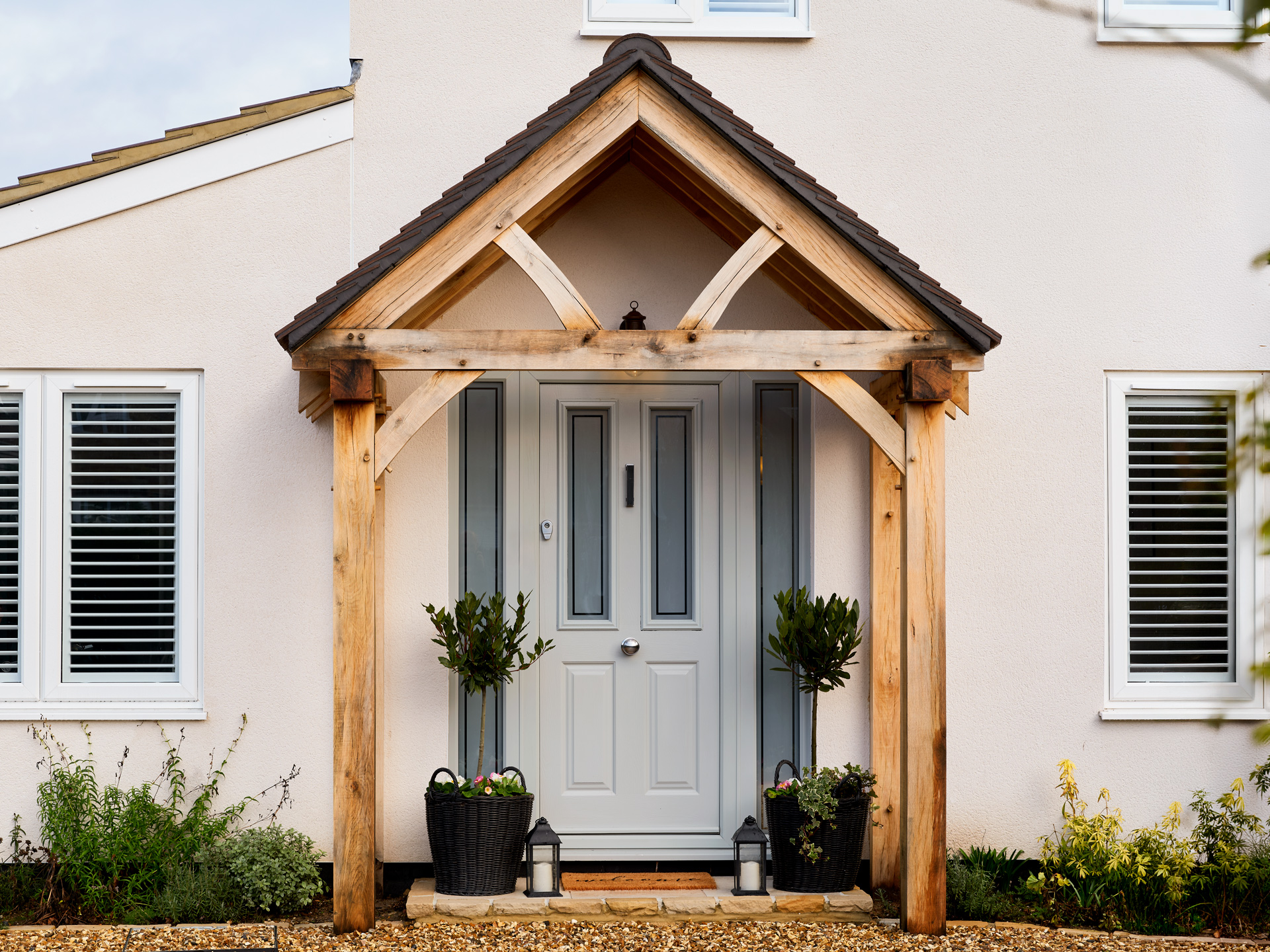
Glazed composite doors combine a solid GRP door skin with decorative or plain double-glazed panels — the standard specification where a Cornish hallway needs more natural light than a fully-solid door provides. Around 80% of the composite doors we install carry some form of glazing, so 'glazed composite door' covers a very broad specification range: half-glazed traditional Victorian doors, contemporary vertical-glass modern doors, cottage doors with small-pane upper glazing, and every variation in between.
This page covers glazed composite doors as a general specification. For specific glazing arrangements see our half-glazed and full-glazed style pages, or the modern, traditional and cottage style pages for period-specific glazing choices.
Typical price
£1,395–£1,895
Fully installed, 10-year guarantee
Want a quick price?
Free survey, no salesman, no obligation.
Where glazed composite doors suit.
- North-facing frontages
- Long hallways
- Family homes
Glazed Composite Doors: the detail.
Why glaze a composite door
Most Cornish front doors open onto a hallway that has no window of its own. Without glazed panels in the door, the hallway relies entirely on light from adjoining rooms or from artificial lighting. A glazed composite door — even with obscure or decorative glass — dramatically improves the daylight character of the hallway. The larger the glazed area, the more light enters.
How much glazing is right
Standard rule: match the glazing area to the hallway depth and orientation. A short north-facing hallway benefits from maximum glazing (half or full-glazed door plus sidelights). A long south-facing hallway with a large window at the far end may only need minimal glazing (small upper panels) because natural light already reaches the door area. Corner properties with side windows often need less door glazing because the hallway has cross-light.
Glazing patterns available
Solid double-glazed panels in obscure, sandblasted or figured glass are the most common for privacy-focused installations. Decorative leaded units in diamond, geometric or Georgian-bar patterns suit traditional and period properties. Stained-effect coloured glass matches Victorian originals. Clear toughened glass gives maximum light but no privacy. Georgian-bar arrangements (visible bars dividing large panels into smaller-pane geometry) suit Georgian and Regency properties.
Toughened safety glass
All glazing in composite doors is toughened to BS 6206 Class A — the same specification as low-level windows and glass doors under Approved Document N. Toughened glass breaks into small cuboid fragments rather than sharp shards, and is significantly stronger against impact than annealed glass.
Double-glazing thermal performance
Standard specification is 24mm sealed double-glazed units — 4mm outer, 16mm argon-filled cavity, 4mm inner with soft-coat low-E coating. Whole-door U-values with double-glazed panels typically fall between 1.1 and 1.3 W/m²K depending on glass area.
Security implications of glazing
PAS24:2022 impact testing applies to complete doorsets including glazed panels. Toughened double-glazed units achieve the same PAS24 impact-resistance as solid GRP skin sections. Multi-point locking, 3-star cylinders and reinforced hinges apply regardless of glazing area.
Glazing arrangements by style
Modern and contemporary: vertical narrow bars, full-height panels. Traditional and Victorian: two horizontal upper panels, often decoratively glazed. Cottage: multiple small square panes in a 2x2 or 3x2 arrangement. Georgian: fanlight above door with Georgian-bar glazing patterns. Each style has its natural glazing convention — mixing styles usually reads as awkward.
Privacy — obscure and sandblasted
Where the door faces public street access and daylight is wanted without visibility, sandblasted or obscure glass is the standard choice. Sandblasted patterns range from full frosting (maximum privacy, minimum pattern visibility) through small-scale geometric patterns to large-scale decorative floral designs. All maintain full daylight transmission while blocking direct visibility.
Bespoke glazing
Solidor, Endurance, Rockdoor and Comp Door all offer bespoke glazing design services. Bring photographs, dimensions or original glass samples and the manufacturer will produce a matching sealed unit. Bespoke units add 2 to 3 weeks to standard manufacturing lead-time and typically £100 to £300 to the base cost depending on pattern complexity.
Maintenance
Glass surfaces clean with warm soapy water or standard glass cleaner. Decorative units within sealed double-glazed panels need no cleaning themselves — the pattern sits between the outer glass leaves and is protected permanently.
Why glazed composite doors make sense in Cornwall.
Serious security
PAS24-tested doorset with a 3-star anti-snap cylinder and multi-point locking as standard.
Warm and efficient
U-values around 1.0 W/m²K — significantly better than uPVC or hardwood alternatives.
10-year colour guarantee
UV-stabilised GRP skins that hold their colour for a decade, even on south-facing frontages.
Zero maintenance
Never needs painting. A wipe with warm soapy water twice a year is all it asks for.
Kerb appeal you notice
Bespoke colour, hardware and glass combinations designed around your property.
Installed professionally
Cornwall-based, Certass-registered fitters. Same-day install with a full cleanup.
Best colours for glazed composite doors.
Every finish carries a 10-year colour-fastness guarantee.
Design your door.
Choose your components
Compare and cost
- Composite door pricesFull price guide for Cornwall
- Composite door securityPAS24, 3-star cylinders, multi-point locks
- Installation galleryReal Cornish installations
- Frequently asked questionsThe most-asked questions
- Composite door blogGuides, comparisons and advice
- See our brandsSolidor, Endurance, Rockdoor, Comp Door
Glazed Composite Doors installed across Cornwall.
Composite Doors Truro
Truro homeowners choose composite doors for the blend of period-friendly styling and modern security their listed and Victorian properties deserve. We install across the city centre, Malpas, Highertown and the surrounding villages.
ExploreComposite Doors Falmouth
Salt air is punishing on softwood doors. Composite doors are the smart specification for Falmouth's harbourside terraces and cliff-top homes — the marine-grade skins won't warp, fade or corrode.
ExploreComposite Doors Newquay
From Pentire's holiday lets to family homes in Tretherras, our Newquay composite door installations are trusted to survive Atlantic weather while keeping the kerb appeal buyers expect.
ExploreComposite Doors St Austell
St Austell's mix of granite cottages, china-clay terraces and new-build estates means we're installing everything from Chartwell Green heritage doors to sleek anthracite grey styles.
ExploreComposite Doors Penzance
Penzance's exposed south-coast position demands doors engineered for it. Our composite installations shrug off wind-driven rain and salt spray from Mount's Bay.
ExploreComposite Doors Bodmin
Bodmin homes see everything the moor throws at them. Composite doors give the thermal efficiency and weather resistance moorland properties need.
ExploreOther glazed styles.
Glazed Composite Doors — questions answered.
Get started
Ready for a new glazed composite door?
Free, no-obligation surveys across Cornwall. Written 10-year guarantee on every install.