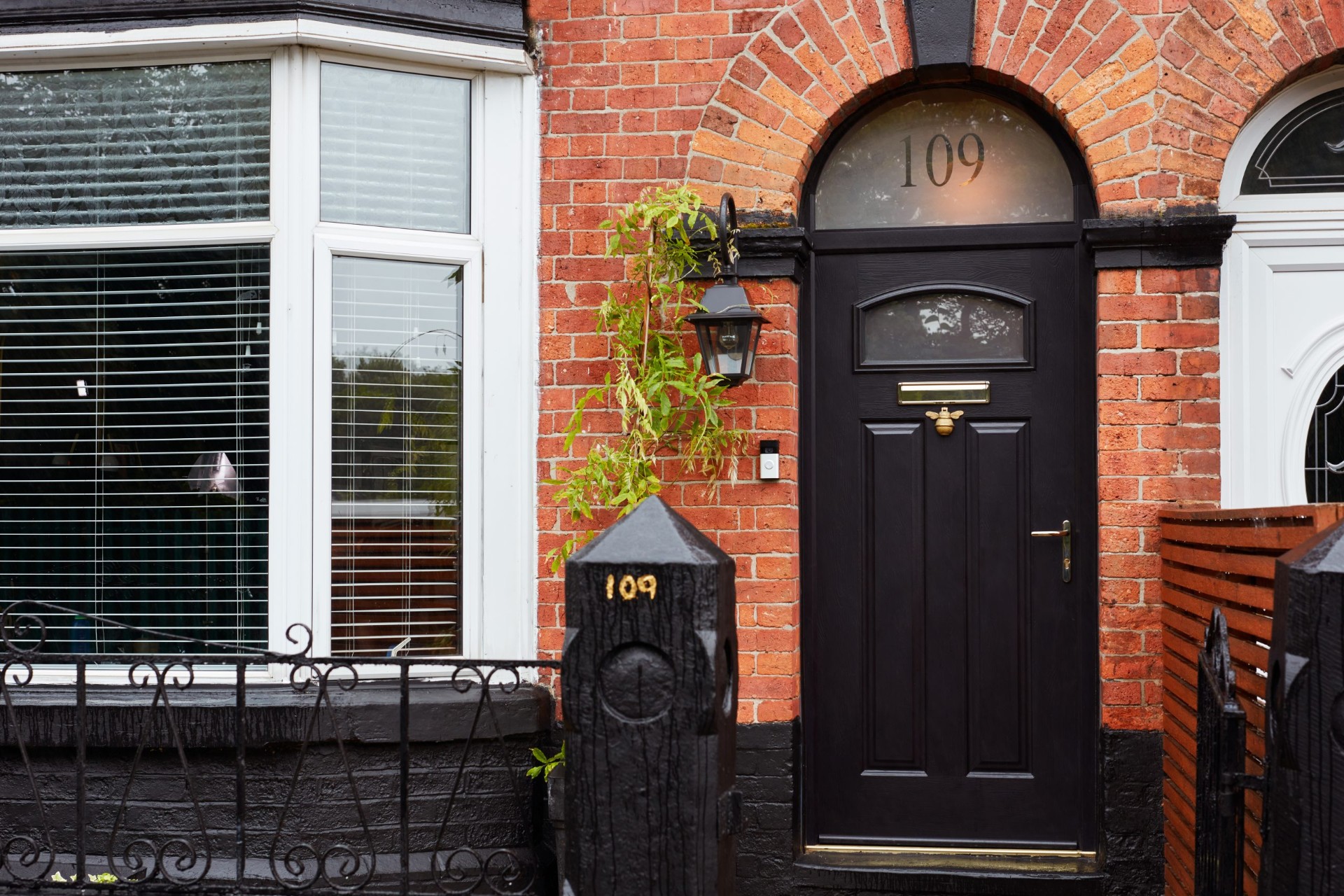
Heritage composite doors are specified where a property carries genuine period importance — conservation-area terraces, listed-adjacent buildings, Georgian townhouses in Truro and Falmouth, planning-sensitive frontages across the county. The category leans harder into authenticity than a general 'traditional' door: correct panel proportions for the specific period, RAL heritage colour matching, hand-crafted glazing patterns and hardware finishes documented against period reference.
We work with Cornwall Council conservation officers and local design panels regularly on heritage installations. Composite construction is often accepted where the design intent is documented and the specification is period-correct; where it is not, we advise timber as an alternative rather than push composite through a marginal approval.
Typical price
£1,895–£2,595
Fully installed, 10-year guarantee
Want a quick price?
Free survey, no salesman, no obligation.
Where heritage composite doors suit.
- Listed buildings
- Conservation areas
- Georgian frontages
Heritage Composite Doors: the detail.
What defines a heritage door
A heritage composite door is built to a specification derived from period reference, not from general 'traditional' assumptions. That means the panel proportions match the period the property was built in (Georgian, Regency, early or late Victorian, Edwardian have different panel arrangements); the colour is specified against a RAL heritage reference (often BS 4800); and the glazing carries a pattern documented from the period (Georgian small-pane, Victorian etched, Edwardian bevelled and leaded). Hardware finishes are aged brass, antique black or period-correct chrome — not modern satin finishes.
Cornish conservation areas
Cornwall has extensive conservation area coverage. Falmouth, Penryn, Truro, St Ives, Padstow, Fowey, Mevagissey, Charlestown, Marazion and dozens of villages across the county carry conservation designation. Any front door replacement in a conservation area may face design controls — some councils apply Article 4 directions removing permitted development rights for door replacement entirely. We check the property's designation and advise on likely consent requirements before quoting.
Working with conservation officers
The successful pattern for approving a composite door in a conservation area is: match the panel arrangement to the period, specify a heritage RAL colour rather than a modern flat colour, use leaded or Georgian-bar glazing with visible small-pane detail, choose antique brass or antique black hardware, and document the specification with elevations and colour swatches for the planning application. Conservation officers respond well to considered specifications; they reject applications that read as standard modern composites with a token gesture towards period appearance.
Listed buildings
Grade I and Grade II* listed buildings almost always require timber doors and cannot accept composite. Grade II listings sometimes accept composite where the specification is genuinely heritage-appropriate, but consent is at officer discretion and cannot be assumed. We are happy to discuss the specific listing conditions on your property and, where composite is not appropriate, recommend a timber specialist.
Recommended period-correct colours
Chartwell Green (RAL 6021), Cream (BS 10-C-33), Traffic Black (RAL 9017), Ox-blood Red (RAL 3004), Oxford Blue (RAL 5013), Cornish White (BS 00-E-55) are our most-used heritage colours. Solidor's Heritage range and Endurance's traditional colour set cover the majority of period-correct specifications; bespoke RAL matching handles anything else.
Period-correct glazing
Georgian properties (pre-1830) use small-pane 6-over-6 or 8-over-8 arrangements. Regency (1810–1830) leans towards larger central panes with narrow border glazing. Early Victorian (1830–1860) uses rectangular panels with etched or acid-frosted patterns. Late Victorian (1860–1901) introduces leaded and stained-effect arrangements. Edwardian (1901–1918) uses bevelled clear glass in decorative geometric patterns. Every one of these can be reproduced within a composite doorset's sealed double-glazed unit.
Hardware — aged brass and antique black
Aged brass is the default heritage finish — a warm bronze-brown patina that reads as centuries-aged brass rather than freshly polished. Antique black in ironmongery-detail patterns suits earlier periods and cottage-heritage installations. Where the property has documented period hardware still in place, we can often match or complement it directly.
Frames and finishing
Heritage installations usually specify aluminium frames in a matching heritage colour rather than uPVC — the slimmer sightline and better paint match make aluminium the more appropriate choice on period properties. Threshold detailing pays close attention to matching the original stone or tiled step arrangement.
Planning consent process
For most conservation-area installations, we submit design drawings and specification sheets alongside the homeowner's planning application to Cornwall Council. Turnaround is typically 6 to 8 weeks from application to decision. We do not proceed with manufacture until consent is granted, so full lead-time from initial enquiry to installed door is usually 12 to 16 weeks on heritage projects.
Maintenance
Standard composite maintenance — soapy water twice a year. Aged brass finishes retain their appearance naturally and do not need polishing; polished-brass alternatives require occasional light polishing.
Why heritage composite doors make sense in Cornwall.
Serious security
PAS24-tested doorset with a 3-star anti-snap cylinder and multi-point locking as standard.
Warm and efficient
U-values around 1.0 W/m²K — significantly better than uPVC or hardwood alternatives.
10-year colour guarantee
UV-stabilised GRP skins that hold their colour for a decade, even on south-facing frontages.
Zero maintenance
Never needs painting. A wipe with warm soapy water twice a year is all it asks for.
Kerb appeal you notice
Bespoke colour, hardware and glass combinations designed around your property.
Installed professionally
Cornwall-based, Certass-registered fitters. Same-day install with a full cleanup.
Best colours for heritage composite doors.
Every finish carries a 10-year colour-fastness guarantee.
Design your door.
Choose your components
Compare and cost
- Composite door pricesFull price guide for Cornwall
- Composite door securityPAS24, 3-star cylinders, multi-point locks
- Installation galleryReal Cornish installations
- Frequently asked questionsThe most-asked questions
- Composite door blogGuides, comparisons and advice
- See our brandsSolidor, Endurance, Rockdoor, Comp Door
Heritage Composite Doors installed across Cornwall.
Composite Doors Truro
Truro homeowners choose composite doors for the blend of period-friendly styling and modern security their listed and Victorian properties deserve. We install across the city centre, Malpas, Highertown and the surrounding villages.
ExploreComposite Doors Falmouth
Salt air is punishing on softwood doors. Composite doors are the smart specification for Falmouth's harbourside terraces and cliff-top homes — the marine-grade skins won't warp, fade or corrode.
ExploreComposite Doors Newquay
From Pentire's holiday lets to family homes in Tretherras, our Newquay composite door installations are trusted to survive Atlantic weather while keeping the kerb appeal buyers expect.
ExploreComposite Doors St Austell
St Austell's mix of granite cottages, china-clay terraces and new-build estates means we're installing everything from Chartwell Green heritage doors to sleek anthracite grey styles.
ExploreComposite Doors Penzance
Penzance's exposed south-coast position demands doors engineered for it. Our composite installations shrug off wind-driven rain and salt spray from Mount's Bay.
ExploreComposite Doors Bodmin
Bodmin homes see everything the moor throws at them. Composite doors give the thermal efficiency and weather resistance moorland properties need.
ExploreHeritage Composite Doors — questions answered.
Get started
Ready for a new heritage composite door?
Free, no-obligation surveys across Cornwall. Written 10-year guarantee on every install.