Victorian Composite Doors
Stained-glass panels and decorative detail.
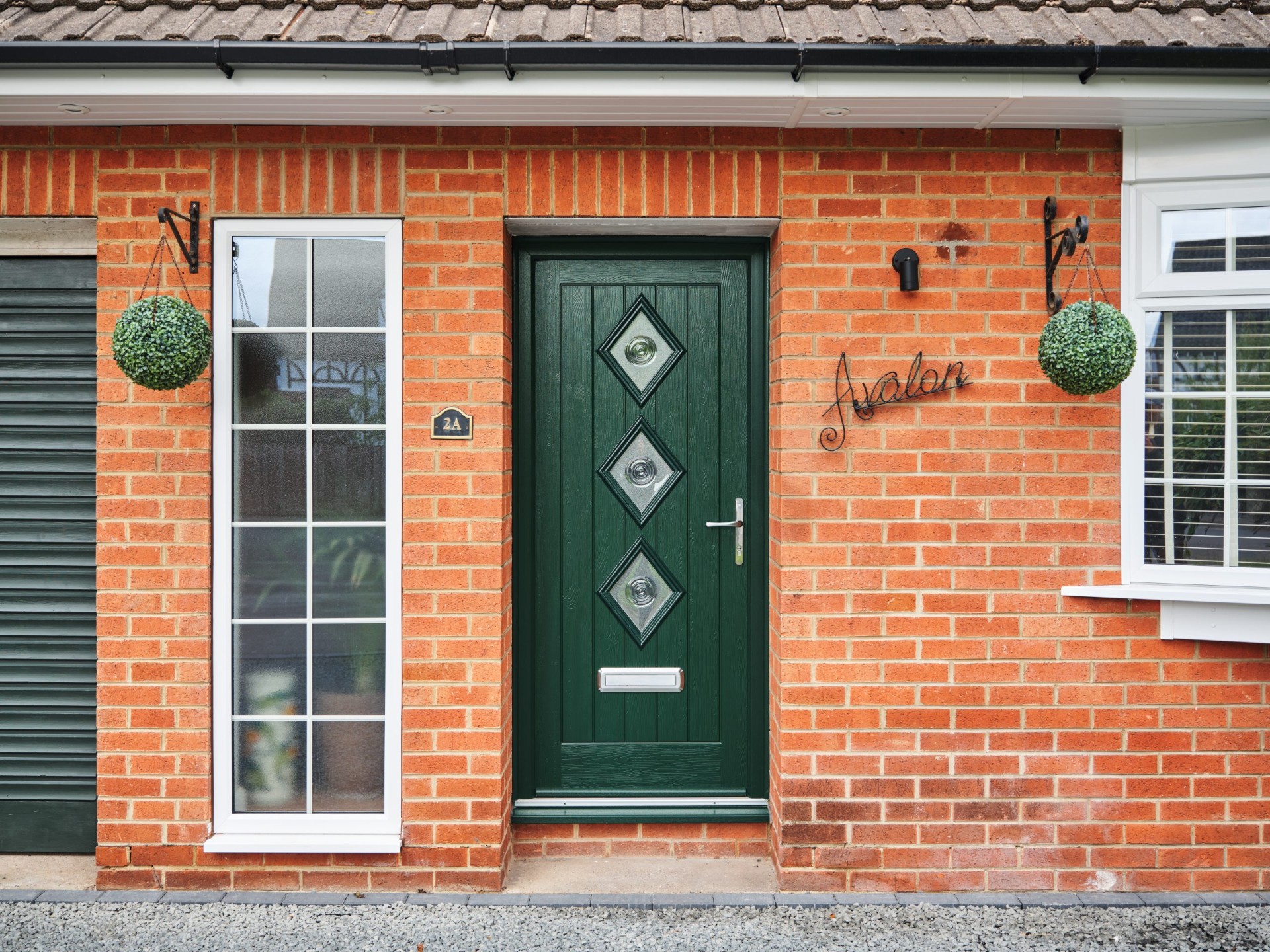
Victorian composite doors reproduce the taller, more decoratively-glazed doors of late-1800s Cornish housing stock — high-panel four-part or five-part arrangements with substantial stained-effect or leaded glazed panels in the upper section. Late Victorian design broke away from Georgian classical restraint and embraced decorative glazing, richer colours and heavier applied ornament.
Cornwall's Victorian housing stock is substantial: entire terraces in Penzance, Redruth, Camborne, Truro, Falmouth and the county's mining towns were built between 1860 and 1900 to Victorian conventions. Original Victorian doors survive on many properties but rarely in usable condition — the panel joints and glazing beads that were the original weak points have almost always failed by now.
Typical price
£1,895–£2,595
Fully installed, 10-year guarantee
Want a quick price?
Free survey, no salesman, no obligation.
Where victorian composite doors suit.
- Victorian terraces
- Bay-fronted semis
- Villas
Victorian Composite Doors: the detail.
Design characteristics
Victorian doors are visibly taller than Georgian equivalents (Victorian ceilings ran higher, so doors ran higher too). The panel arrangement is usually four parts: two large upper glazed panels above two solid or half-panel lowers. The glazed section is where Victorian doors made their statement — coloured, textured, patterned or figured glass in decorative arrangements. Late Victorian doors often carried stained-glass central panels with intricate leaded arrangements.
Victorian Cornwall — where these doors sit
Terraces built during Cornwall's mining boom in Redruth, Camborne, Penzance and Hayle; the Victorian expansions of Truro (Chapel Hill area, Trelawny Road, Rosewin Row); the middle-class streets of Falmouth (Melvill Road area) and Newquay's Victorian core. Late Victorian villas throughout the county carry higher-specification doors with fully-leaded stained glass panels.
Stained-effect glazing
Original Victorian doors used genuine stained glass — small pieces of coloured glass leaded together into decorative panels. Modern composite installations reproduce this reading using stained-effect glass within a sealed double-glazed unit. Coloured glass squares, textured obscure patterns, leaded diamond or geometric arrangements are all available in the standard libraries. Where the original pattern needs to be reproduced exactly, bespoke glazed units are made to order.
Colour — Victorian richness
Ox-blood red, deep green, Oxford blue, Victorian black and rich creams dominate the Victorian palette. Chartwell Green also suits Victorian frontages, particularly on middle-class semis and villas. Bright pastel colours are not period-authentic for Victorian installations.
Security
Standard PAS24:2022, 3-star anti-snap cylinder and multi-point locking. Victorian doors with large upper glazed panels carry the same overall security rating as flush doors — the toughened glass and multi-point locking together achieve the same PAS24 impact-test threshold.
Hardware
Antique brass, polished brass and antique black in decorative Victorian patterns. Ornate lion's-head knockers, urn-pattern letterplates, ceramic-centred numerals, and decorative escutcheons around the cylinder complete the Victorian reading. Some Victorian installations retain a matching Victorian-pattern bell-pull mounted alongside the door.
Fanlights and side-lights on Victorian frontages
Victorian frontages often carry both a decorative fanlight above the door and matching decorative side-lights. Where these features exist, we specify the composite doorset as a coordinated composition — matching glazing patterns across door, fanlight and side-lights so the whole entrance reads as a designed unit rather than three separate elements.
Conservation area considerations
Many Victorian terraces in Cornwall sit within conservation areas. Composite doors are usually acceptable when specified authentically — four-panel Victorian arrangement, stained-effect glazing matched to any surviving originals in the terrace, period colour, brass hardware. Article 4 directions restricting door replacement may apply in some conservation areas.
Lead-time on bespoke stained-effect glazing
Standard Victorian composite installations: 5 to 6 weeks manufacture. Bespoke stained-effect glazing matched from photographs of the original: 6 to 8 weeks. Full conservation area consent adds 6 to 8 weeks before manufacture begins.
Maintenance
Standard composite maintenance. Stained-effect glazing sits within the sealed unit and needs no cleaning or maintenance itself — external glass surfaces clean with soapy water as normal.
Why victorian composite doors make sense in Cornwall.
Serious security
PAS24-tested doorset with a 3-star anti-snap cylinder and multi-point locking as standard.
Warm and efficient
U-values around 1.0 W/m²K — significantly better than uPVC or hardwood alternatives.
10-year colour guarantee
UV-stabilised GRP skins that hold their colour for a decade, even on south-facing frontages.
Zero maintenance
Never needs painting. A wipe with warm soapy water twice a year is all it asks for.
Kerb appeal you notice
Bespoke colour, hardware and glass combinations designed around your property.
Installed professionally
Cornwall-based, Certass-registered fitters. Same-day install with a full cleanup.
Best colours for victorian composite doors.
Every finish carries a 10-year colour-fastness guarantee.
Design your door.
Choose your components
Compare and cost
- Composite door pricesFull price guide for Cornwall
- Composite door securityPAS24, 3-star cylinders, multi-point locks
- Installation galleryReal Cornish installations
- Frequently asked questionsThe most-asked questions
- Composite door blogGuides, comparisons and advice
- See our brandsSolidor, Endurance, Rockdoor, Comp Door
Victorian Composite Doors installed across Cornwall.
Composite Doors Truro
Truro homeowners choose composite doors for the blend of period-friendly styling and modern security their listed and Victorian properties deserve. We install across the city centre, Malpas, Highertown and the surrounding villages.
ExploreComposite Doors Falmouth
Salt air is punishing on softwood doors. Composite doors are the smart specification for Falmouth's harbourside terraces and cliff-top homes — the marine-grade skins won't warp, fade or corrode.
ExploreComposite Doors Newquay
From Pentire's holiday lets to family homes in Tretherras, our Newquay composite door installations are trusted to survive Atlantic weather while keeping the kerb appeal buyers expect.
ExploreComposite Doors St Austell
St Austell's mix of granite cottages, china-clay terraces and new-build estates means we're installing everything from Chartwell Green heritage doors to sleek anthracite grey styles.
ExploreComposite Doors Penzance
Penzance's exposed south-coast position demands doors engineered for it. Our composite installations shrug off wind-driven rain and salt spray from Mount's Bay.
ExploreComposite Doors Bodmin
Bodmin homes see everything the moor throws at them. Composite doors give the thermal efficiency and weather resistance moorland properties need.
ExploreVictorian Composite Doors — questions answered.
Get started
Ready for a new victorian composite door?
Free, no-obligation surveys across Cornwall. Written 10-year guarantee on every install.