Composite doors · Portreath

Composite doors in Portreath, installed professionally.

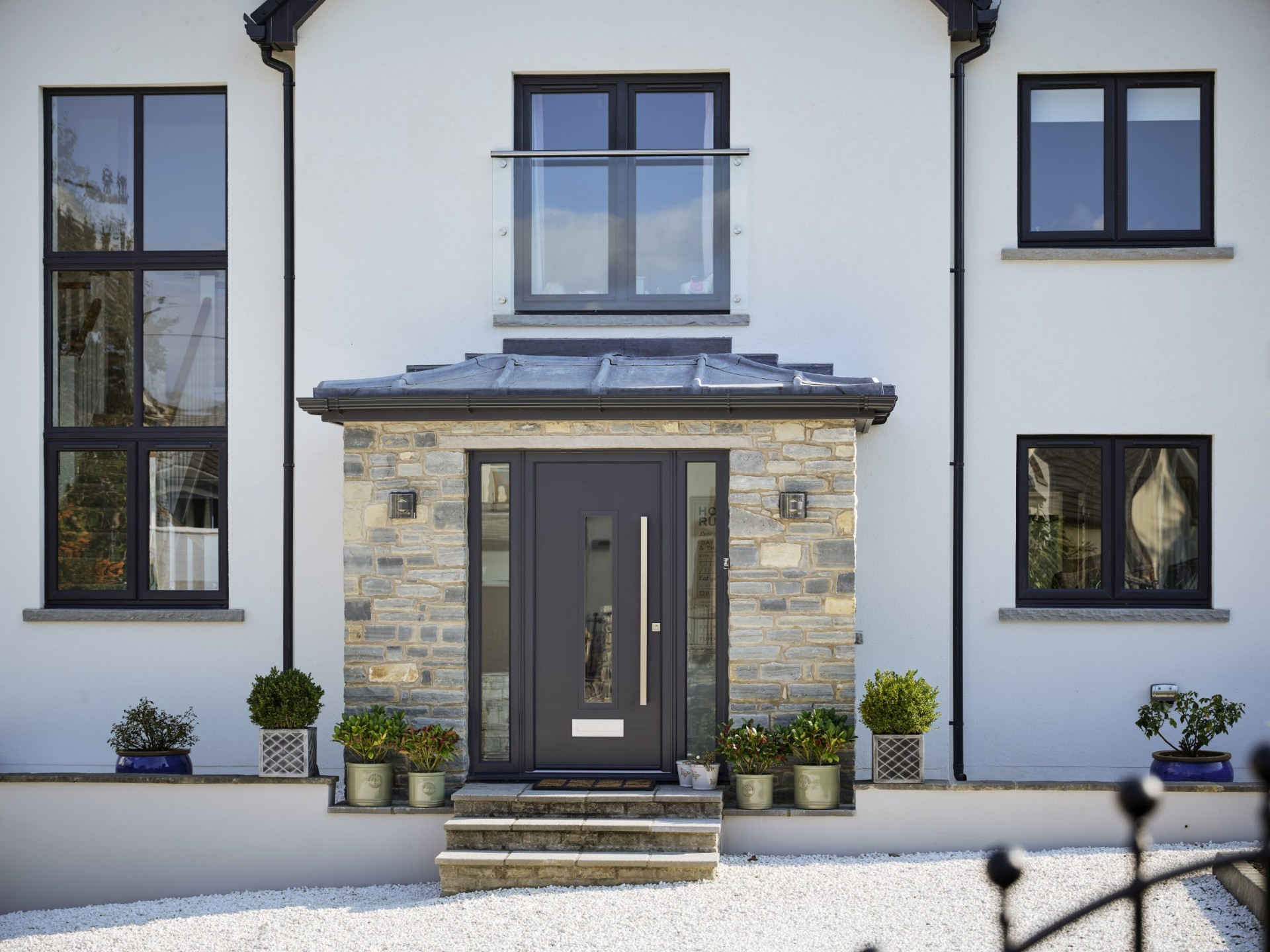
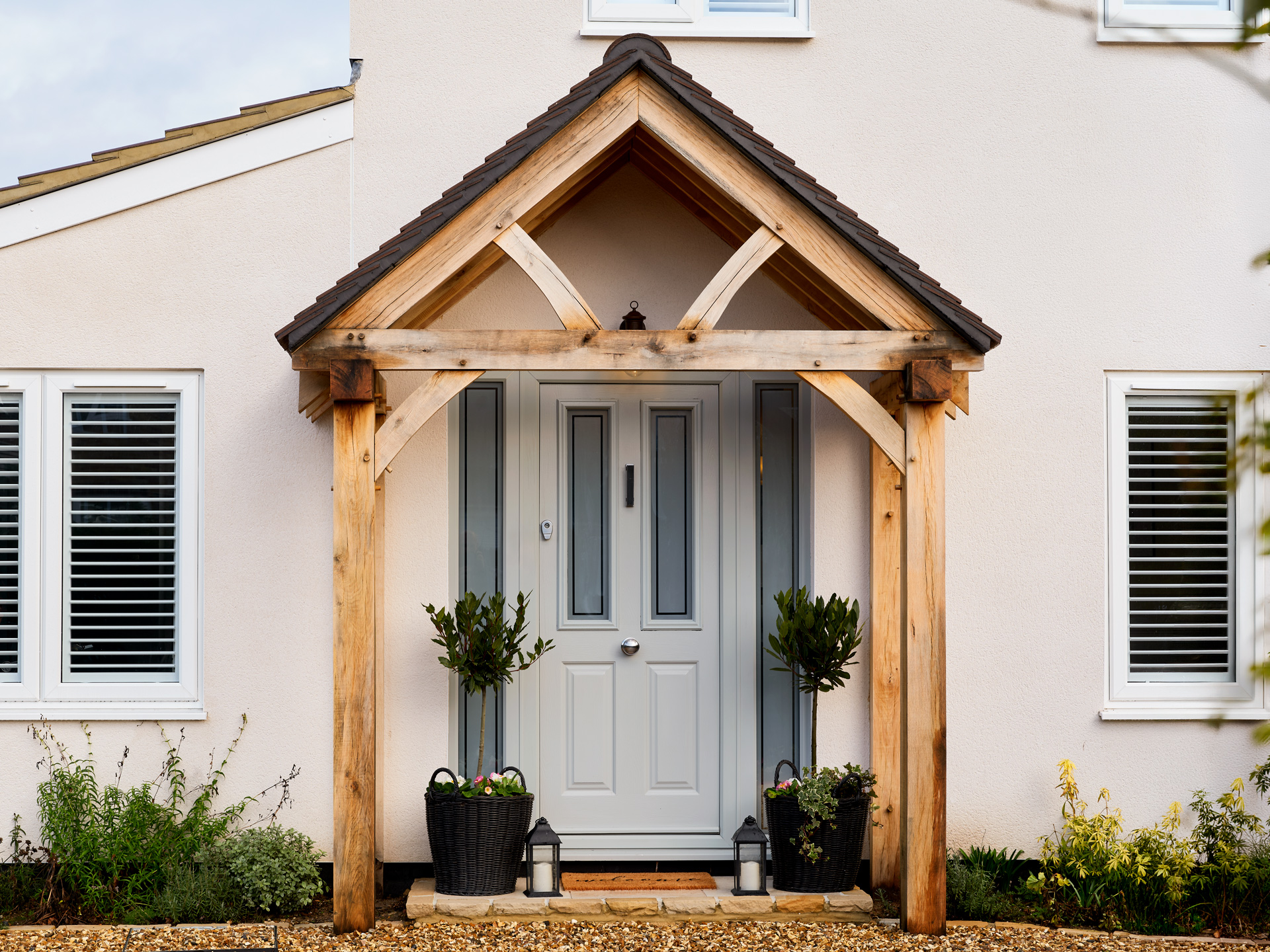
Portreath's harbourside cottages need a door engineered for salt spray. Composite skins won't corrode and the colour finish is guaranteed for a decade.

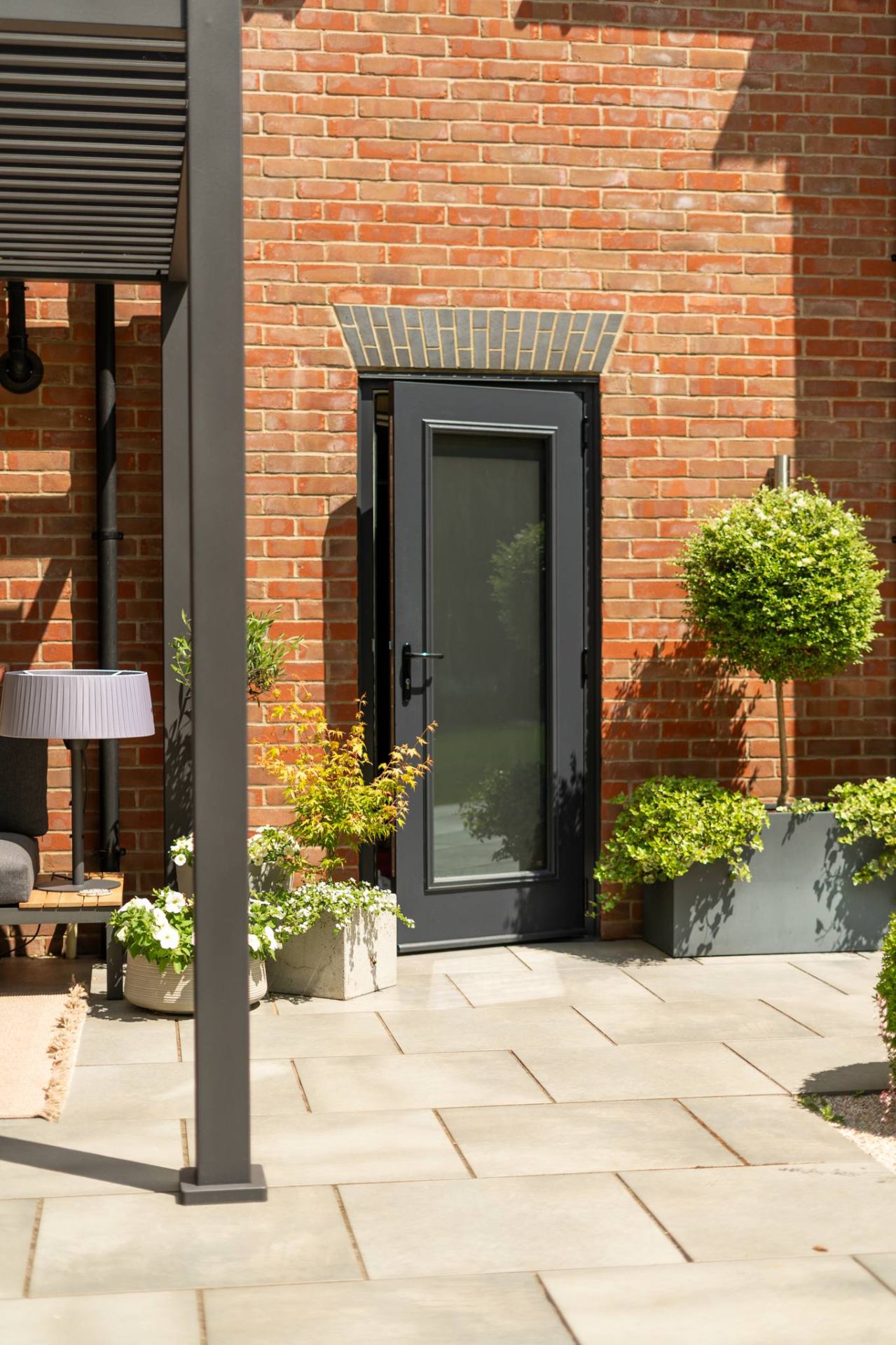
Anthracite Grey fully-glazed composite back door on a red-brick home
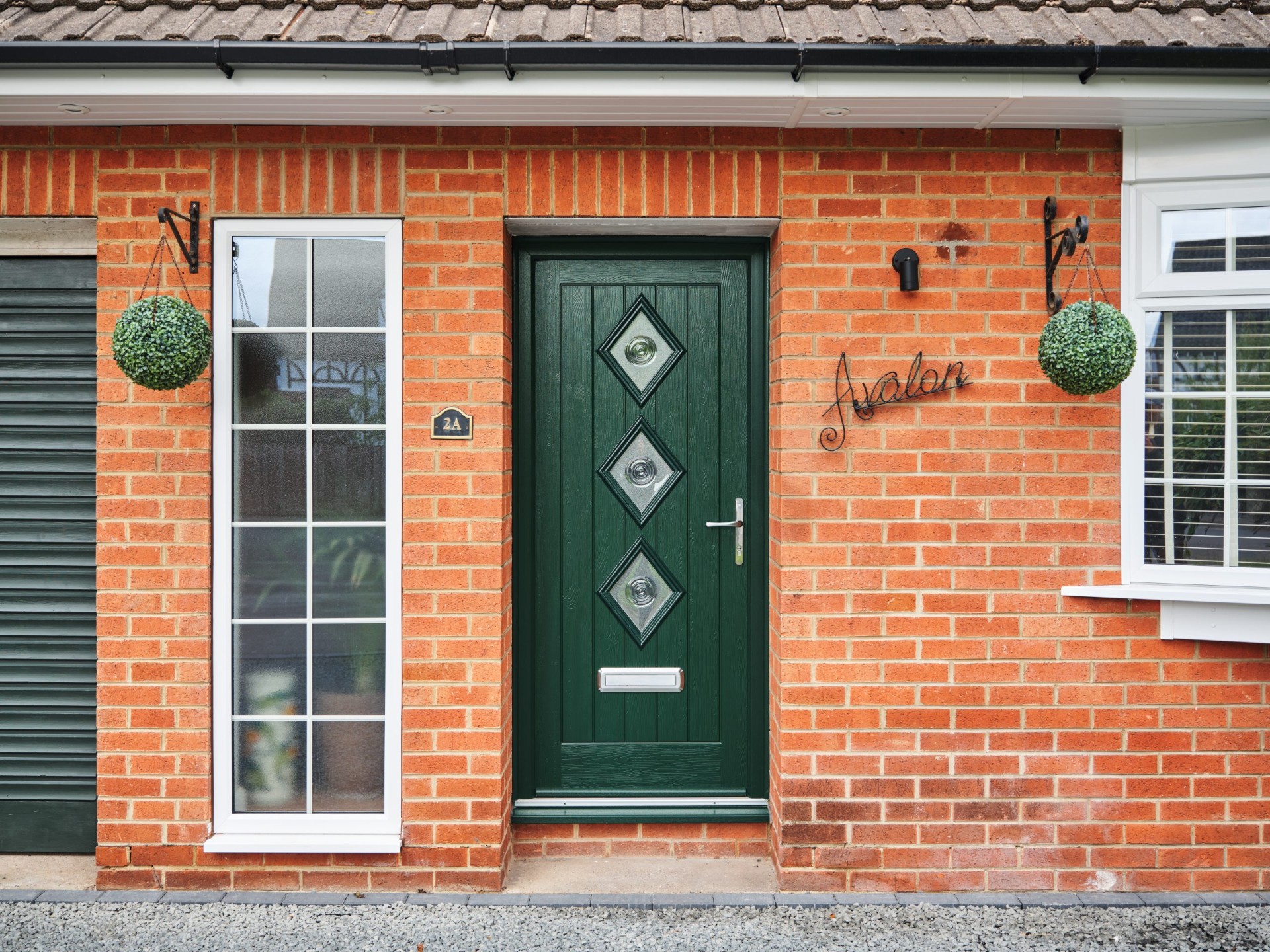
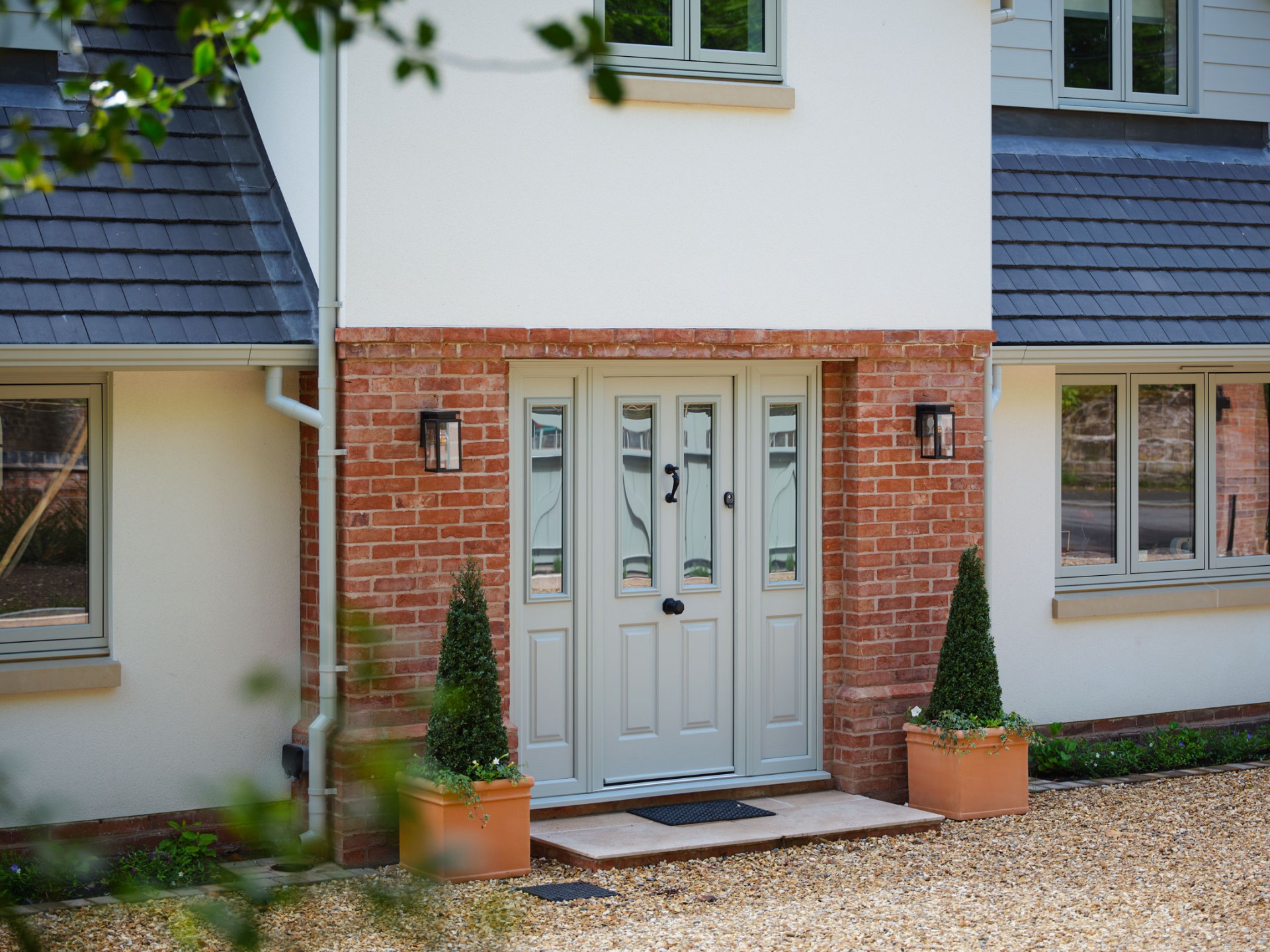
Green cottage composite door with three diamond glass panels
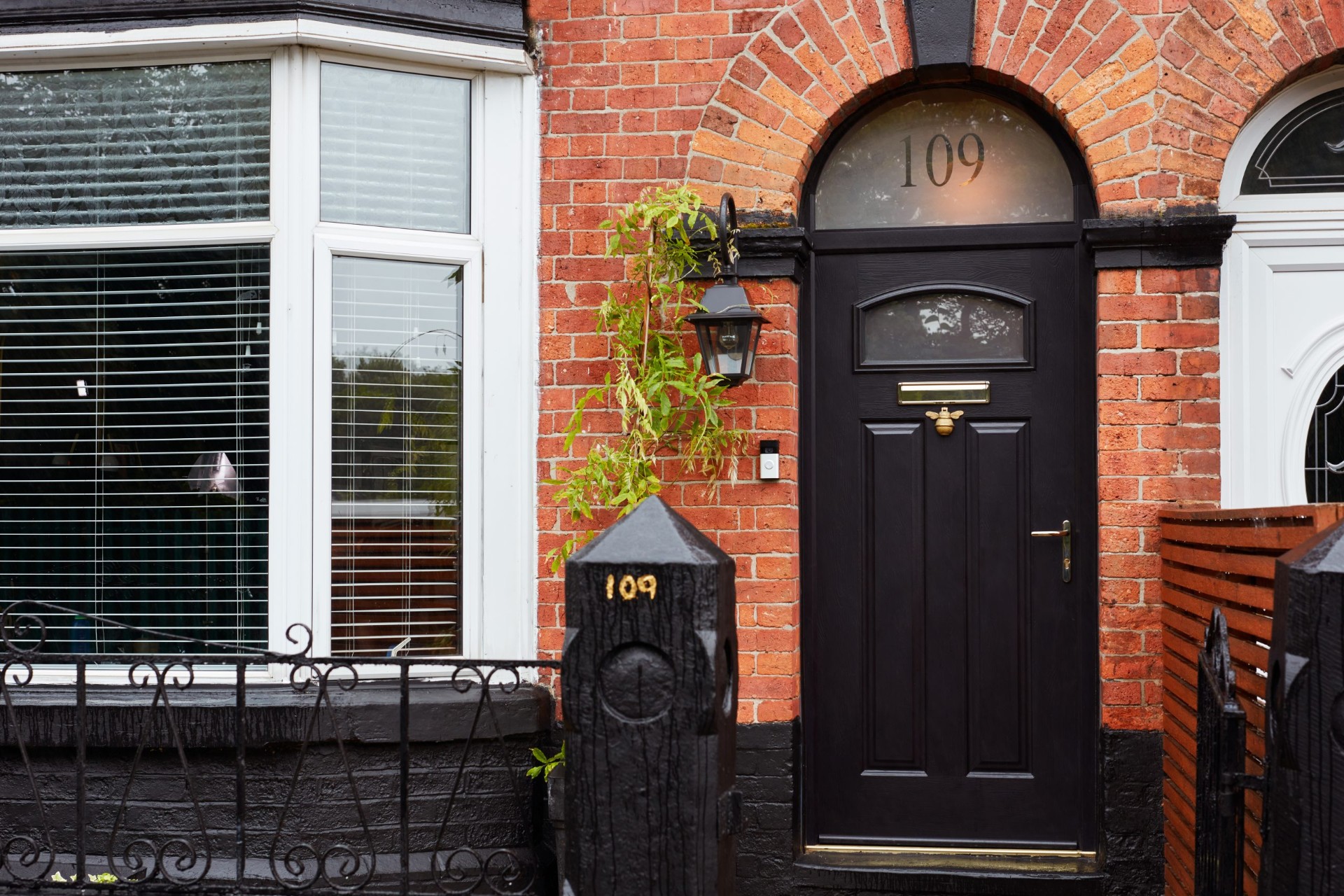
Black traditional composite door with arched fanlight on a Victorian red-brick terrace
PAS24 security tested
10-year written guarantee
Cornwall-based installers
CERTASS certified
Certass registered

Door fitters in Portreath — composite front doors, done properly


Portreath's cove and harbour form a narrow inlet that funnels Atlantic weather straight into the village. The beachfront properties and the terraces climbing up toward the coast road take the full force of onshore wind and salt spray, and a front door here lives an unusually hard life.


On the ground in Portreath


Marine-grade specification is non-negotiable on Portreath installs — stainless fixings, drainable thresholds, colour skins guaranteed against salt fade for a decade. The village's palette leans traditional (Cream, Chartwell Green) in the older cottages and Anthracite Grey in the newer housing above the beach.


Composite door prices in Portreath


Fitted composite doors in Portreath start from £1,395 for a standard single doorset and rise to around £2,895 for a wider door with side panels or premium hardware. Every quote is fixed and written — see our UK composite door cost guide for the full 2026 price breakdown, or read about front door replacement across Cornwall.

Want a quick price?

Free survey, no salesman, no obligation.

Get a free quote

Local landmarks

  • · Portreath Beach
  • · Tehidy Woods

Postcodes covered

TR16

Benefits

Composite door benefits for Portreath homes.

Serious security

PAS24-tested doorset with a 3-star anti-snap cylinder and multi-point locking as standard.

Warm and efficient

U-values around 1.0 W/m²K — significantly better than uPVC or hardwood alternatives.

10-year colour guarantee

UV-stabilised GRP skins that hold their colour for a decade, even on south-facing frontages.

Zero maintenance

Never needs painting. A wipe with warm soapy water twice a year is all it asks for.

Kerb appeal you notice

Bespoke colour, hardware and glass combinations designed around your property.

Installed professionally

Cornwall-based, Certass-registered fitters. Same-day install with a full cleanup.

In short

In Portreath (TR16) a fitted composite front door typically runs £1,495–£2,895, and the spec is dictated almost entirely by the village's exposure to the north coast — you're at the mouth of Tehidy's valley with nothing between the front door and the Atlantic but a stretch of beach and a harbour wall.

Streets and areas we cover: The Square, Tregea Terrace, Battery Hill, Glenfeadon Terrace, Forth An Nance, Tolgarrick Road, The Hillside, Sunny Corner, Reskajeage Downs and out toward Tehidy Woods and Nancekuke.

A harbour village that punches above its weight for exposure

Portreath is small — barely 1,500 people — but it takes a battering out of proportion to its size. The village sits at the seaward end of a steep valley that funnels weather straight off the Atlantic and drops it onto the harbour, the Square and the terraces climbing Battery Hill. There's no headland shelter here the way there is at somewhere like St Mawes; the beach faces due north-west and takes the brunt of every autumn and winter low that comes in off the water. We've re-hung enough front doors on Tregea Terrace and around the harbour to know that a door bought on price alone rarely sees out a decade in this postcode.

The building stock is a mix that tells the village's history plainly: harbourmaster's cottages and old miners' terraces down by the water, done in granite and thick rendered stone, and a ring of 1960s-onward bungalows and dormer houses climbing the hill toward Reskajeage Downs and Nancekuke. The old cottages tend to have narrow, low openings that need careful templating — many have been altered at least once already, so the aperture is rarely square. The newer housing further up the hill has more generous, standard openings but faces the wind just as directly, sometimes worse, being higher up and more exposed to the gusts that come across the Tehidy plateau.
Specifying for genuine north-coast exposure

Portreath doesn't get the tourist-season softening that somewhere like Newquay or Falmouth enjoys from a wider bay — the wind here is a year-round working condition rather than an occasional winter event. Every door we fit within a mile of the harbour goes out with A4 stainless steel fixings throughout: hinges, keeps, lock body and screws. Standard zinc-plated hardware will show surface corrosion within two winters this close to open water, and a corroded keep is a security compromise as much as a cosmetic one.

The threshold gets the same attention. We fit a dual-drained, stainless-clad cill with a bedded weatherbar, angled so that wind-driven rain off the beach sheds straight back out rather than pooling against the frame. The compression seal runs on a triple-brush upstand rather than a single continuous line, because a single seal tends to compress unevenly on the older, slightly-out-of-square openings you find on Tregea Terrace and around the Square. None of this shows up as an option on the quote — in TR16 it's simply what the door is.

Colours that work with Portreath's palette

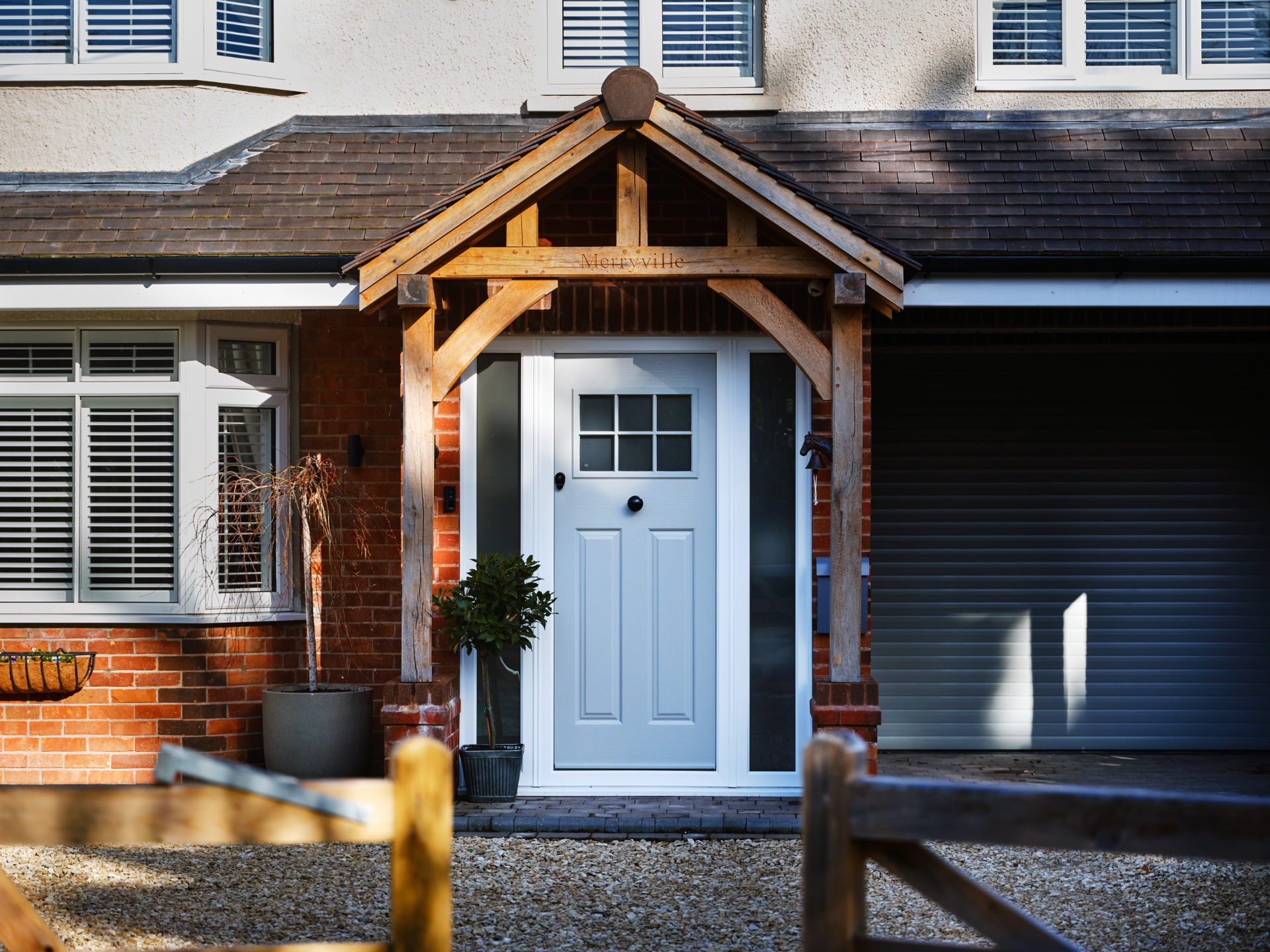
Portreath's colour story is set by the harbour and the granite, not by fashion. Off-White and Cream dominate on the old harbourmaster and fishermen's cottages, where a painted timber look is still expected even though nobody wants the maintenance that comes with actual paint. Chartwell Green turns up regularly on the older terraces — it's a colour that's read as 'correct' on a Cornish harbour cottage for decades and composite lets you keep that look without repainting every three years.

Up the hill, where the housing is younger and the views are wider rather than the frontage being the point, Anthracite Grey and Slate Grey are the two we fit most. They suit the flush-panel, contemporary door styles that go with 1970s and 80s dormer bungalows, and they don't fade visibly under the UV that comes with all that open sky. Duck Egg Blue is an occasional but popular wildcard on the smaller cottages near the beach car park — it reads as coastal without tipping into cliché.

Security on an open, well-used village street

Portreath gets a lot of passing footfall in season — walkers on the coast path, day-trippers to the beach, cars queuing for the car park — and a well-used street is not the same as a low-risk one. Every door we fit carries a PAS24 rating and a 3-star anti-snap cylinder as standard, which satisfies most buildings and contents insurers without a follow-up query. For the terraces right on the Square, where the front door opens straight onto a public pavement, we'd generally recommend upgrading to a keyed multi-point handle set with reinforced strike plates rather than the standard-grade options — the marginal cost is small against the peace of mind.

Holiday cottages, of which Portreath has plenty given the beach, are a slightly different brief. Letting agents want a door that a cleaning team or a guest can operate without training, so we fit keyless or coded locks on a fair number of these — no key cutting, no lost-key call-outs mid-season, and the multi-point lock still engages fully when the door is pulled to.

Getting a van and a crew into Portreath

Portreath's layout makes install day logistics worth mentioning honestly. The Square and the streets immediately around the harbour are narrow, parking is at a premium in season, and delivery access to some of the older cottages is on foot with materials carried the last stretch. We schedule harbour-area jobs outside peak summer weekends where we can, and always confirm parking with the customer in advance rather than assuming.

Up the hill on Tolgarrick Road, The Hillside and the newer estates toward Nancekuke, access is straightforward — a van pulls up outside, and the job runs to the standard pattern: old door and frame out within the first hour, new frame templated and bedded through the morning, slab, hardware and cill weathering finished by mid-afternoon, paperwork handed over on the doorstep before the crew leaves.

Aftercare that matters on a coastal door

A composite door needs less looking after than timber, but 'less' isn't 'none', and that's especially true this close to salt spray. We advise a rinse-down of the frame and cill with fresh water every couple of months over winter — the same five minutes you'd spend hosing down a car after a coastal drive — because salt residue left to sit will eventually attack even stainless fixings at the margins. The door skin itself needs nothing more than an occasional wipe with soapy water; it won't fade, crack or need repainting inside the 10-year guarantee period.

We also recommend an annual check of the hinge and lock lubrication going into winter, particularly for houses that get the worst of the valley wind — the multi-point mechanism works harder in a door that's constantly being pushed against by gusts, and a five-minute check avoids a call-out in January.

Selling or letting a Portreath property

Portreath's property market is dominated by second-home buyers and holiday-letting investors as much as by full-time residents, and both groups care about kerb appeal in a way that inland towns sometimes don't. A tired timber door on a harbourmaster's cottage photographs poorly and reads as a maintenance liability to a buyer who already knows what a Cornish winter does to timber. Swapping to a composite door in a colour that suits the cottage — Off-White or Chartwell Green tend to be the safest bets for resale here — is one of the cheaper ways to lift a listing's first impression.

For landlords letting to holidaymakers, the door is also a practical liability question: guests who can't work an unfamiliar lock at 11pm after a long drive down the A30 generate complaint emails. A composite door with a smart or keyless entry system solves that specific, recurring headache as well as improving security between lets.

Thermal performance and the valley draught

Portreath's valley shape means houses lower down get a channelling effect from the wind, and an old timber door with a worn threshold seal turns that into a noticeable draught across the hallway floor. A composite door's foam-filled core gives a genuine U-value improvement over old single-glazed timber, but the bigger day-to-day difference customers report is the drop in draught and noise — the multi-point lock pulls the slab tight against the frame at three points rather than one, so the door seats properly every time it's closed rather than depending on someone giving it a shove.

For the older cottages near the harbour, where solid stone walls already do a reasonable thermal job, the door swap tends to be about comfort and noise rather than a dramatic bill reduction. On the newer cavity-wall housing up toward Nancekuke, replacing a tired 1980s uPVC door with a modern composite is one of the better-value single upgrades available for winter comfort, short of a full glazing overhaul.

Mistakes we see with doors fitted by others in TR16

The single most common issue we're called out to inspect on an existing Portreath door — not one we've fitted — is a threshold that was never properly weathered to the render or stonework, leaving a gap that lets wind-driven rain track sideways into the frame during a north-westerly. It's a five-minute detail to get right during install and an expensive one to retrofit once water has already got into the timber sub-frame behind a badly bedded cill.

The second is standard, non-marine hardware fitted to a door within sight of the water — hinges and keeps that looked fine on day one and are visibly rusting by year two. It's not a manufacturing fault so much as the wrong spec for the location, and it's exactly why we don't treat the marine upgrade as optional here.

Choosing between glazed and solid for a Portreath frontage

One question we get asked more in Portreath than in sheltered inland villages is whether to glaze the front door at all. A glazed panel lets natural light into a hallway that's often narrow and north-facing in the older harbour cottages, and on the terraces around the Square it can make a real difference to how bright the entrance feels on a grey February morning. The trade-off is that a larger glazed area is one more sealed unit exposed to driving rain and salt-laden wind, so we always spec toughened, weather-rated double glazing units with a drained bar between the panes rather than a cheaper single-seal unit that can mist up within a couple of winters this close to the coast.

For the cottages that get the worst of the exposure right on the harbour wall, plenty of customers opt for a solid door with a small top-light or side panel instead of a full glazed centre panel, which keeps the light benefit without putting as much glass directly in the firing line of wind-driven rain. Further up the hill toward Nancekuke and Reskajeage Downs, where the exposure is more about wind than direct salt spray, a fuller glazed design causes fewer problems and is a popular choice simply because the views justify it. We'll always talk this through at survey rather than assume one answer suits every address in the village, because a door that looks right on a glossy brochure photo isn't automatically the right spec for a specific elevation fifty yards from the sea.

What it costs in Portreath

JobTypical fitted priceNotes
Standard composite door, single colour, no glazing£1,495–£1,795Popular on the estates toward Nancekuke and Reskajeage Downs
Glazed composite door with decorative or coastal-style glass£1,795–£2,195Common choice on Tregea Terrace and the harbour cottages
Heritage six-panel door in a bespoke colour£2,095–£2,495Matches the older harbourmaster's and fisherman's cottages
Marine-spec upgrade (A4 fixings, drainable threshold as standard)Included as standard within a mile of the harbourNo separate line item — built into every Portreath quote
Keyless/smart lock upgrade+£195–£350Popular with holiday-let owners letting via agents
Side panel or top-light addition+£295–£595Fits well on the wider openings up the hill

Prices are guides from recent Portreath jobs; your written quote is fixed after the free survey.

Where we cover

Fitting composite doors across Portreath.

Every Portreath postcode covered — TR16 — plus the surrounding villages and hamlets. Same specification, same 10-year guarantee, same crew.

Loading map — Par Moor Road, St Austell, PL25 3RF
Get Directions
FAQ

Common questions from Portreath.

From the blog

Read our composite door guide for Portreath

Local advice on colours, coastal spec, PAS24 security and what a Portreath install actually looks like.

Read the Portreath guide →

Get started

Free composite door quotes across Portreath.

Free, no-obligation surveys across Cornwall. Written 10-year guarantee on every install.

Full county coverage

We cover the whole of Cornwall.

From Bude to Land's End, Padstow to the Lizard — our Cornwall-based surveyors and installers fit composite doors across every town, village and coastal parish in the county. Same standard, same 10-year guarantee, wherever you are.

  • Truro
  • Falmouth
  • Newquay
  • St Austell
  • Penzance
  • Bodmin
  • Bude
  • Launceston
  • Saltash
  • Redruth
  • Camborne
  • Helston
  • Liskeard
  • Wadebridge
Illustrated map of Cornwall showing towns we cover for composite door installation — Bude, Bodmin, Padstow, Tintagel, Newquay, St Austell, Truro, Falmouth, St Ives, Land's End and Lizard Point.