A village that grew round a road junction, not a mine
Carnon Downs is an odd one in this stretch of Cornwall because, unlike most of its neighbours, it wasn't built to house miners. It grew in the twentieth century around the crossroads where the old Truro turnpike meets the road down to Devoran, and its housing stock reflects that: mostly inter-war and post-war bungalows and chalet bungalows, with a scattering of larger 1970s and 1980s executive-style houses built for people commuting into Truro. There's none of the terraced granite-cottage density you get in St Day or Gwennap a couple of miles up the valley — plots here are bigger, gardens are bigger, and front doors tend to sit back from the road behind a porch or a car-turning circle rather than opening straight onto a pavement.
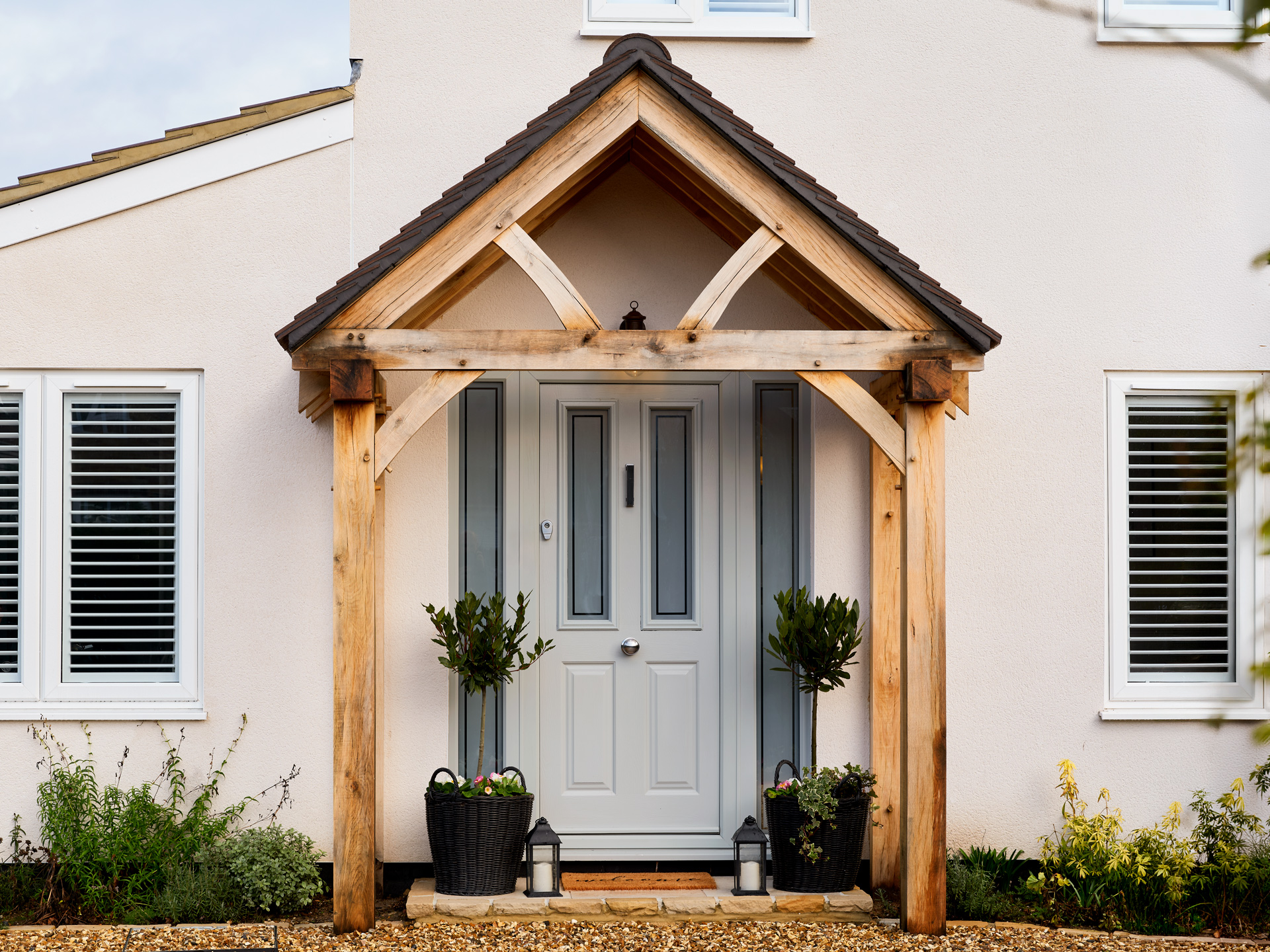
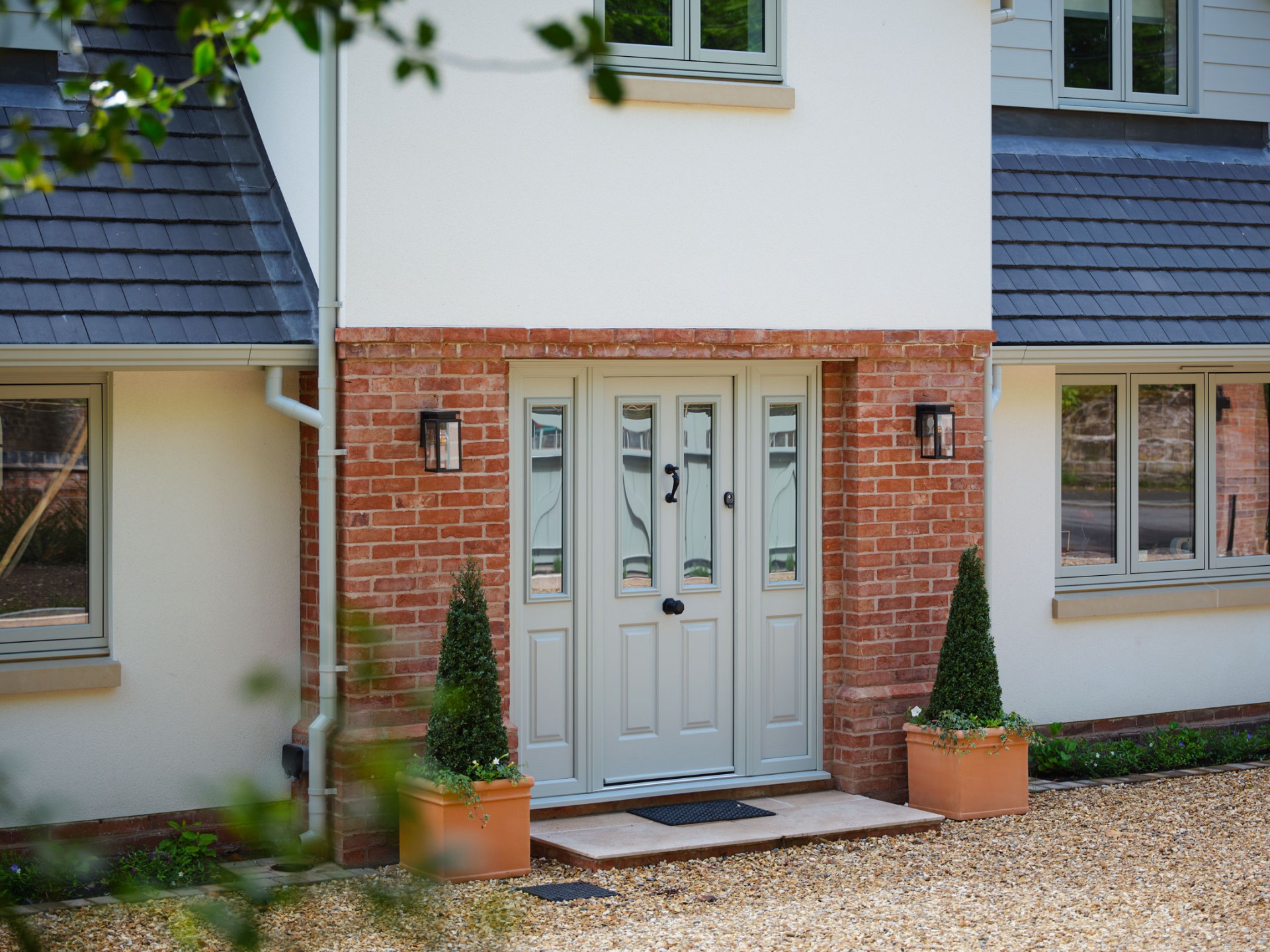
That changes the job in a couple of practical ways. Access for the van is usually straightforward — driveways rather than double yellow lines — so we can get materials right up to the door rather than carrying a frame fifty yards down a terrace. But the doors themselves are often wider and taller than the standard Victorian aperture, because the bungalow porches were built with generous proportions in mind, and a few of the 1970s houses have non-standard openings that need genuine bespoke sizing rather than a stock frame trimmed to fit. We always measure twice on a Carnon Downs survey for exactly that reason.
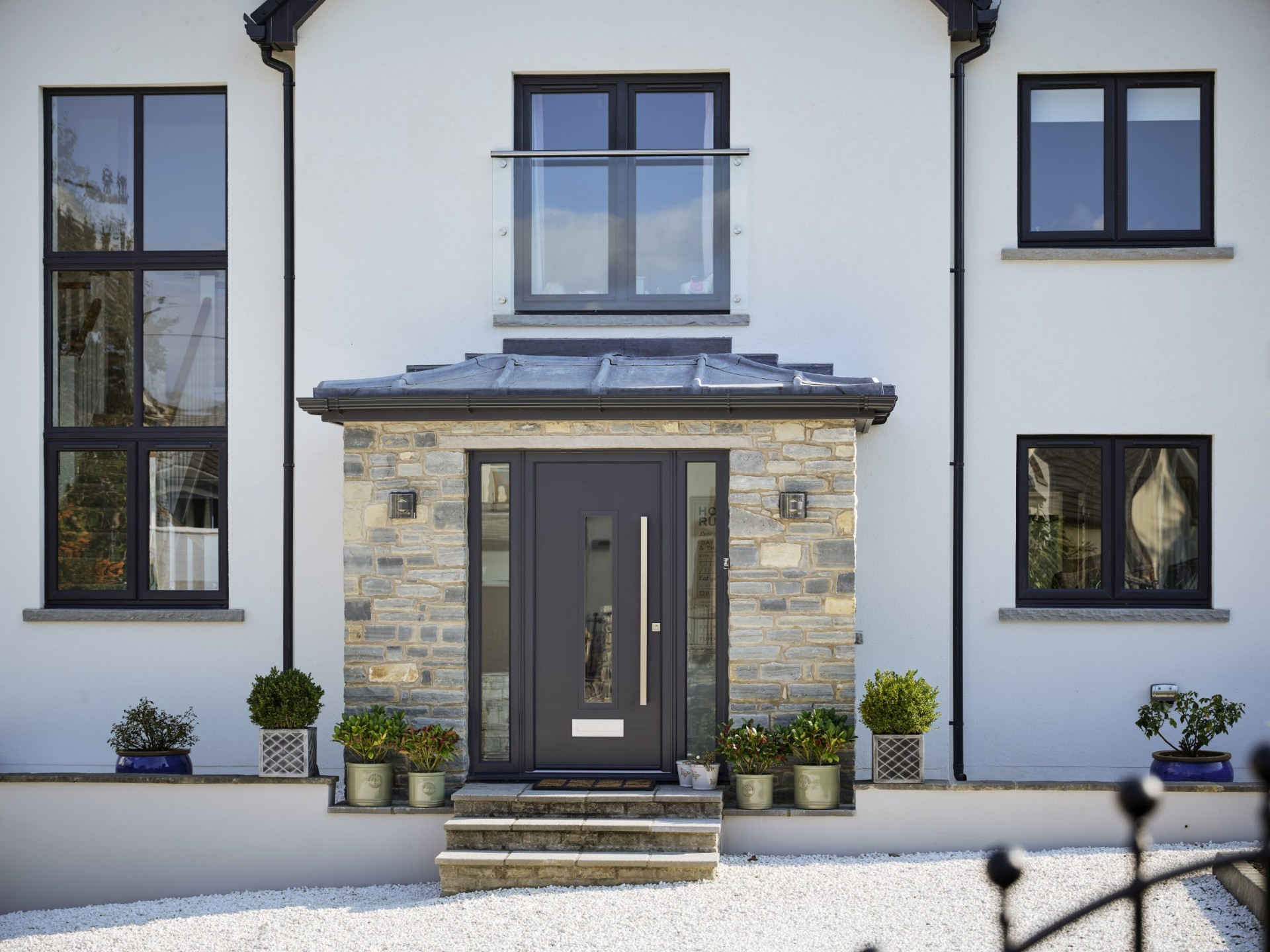
The other thing worth knowing is that a fair number of Carnon Downs homes still have the original 1960s or 1970s hardwood door in place — heavy, often part-glazed with wired or bullseye glass, and by now typically dropped on its hinges even if the timber itself has held up reasonably well. Swapping that for a composite doorset is usually a bigger visual upgrade here than almost anywhere else on our patch, simply because the starting point is often so dated.